Million Milkweeds Project
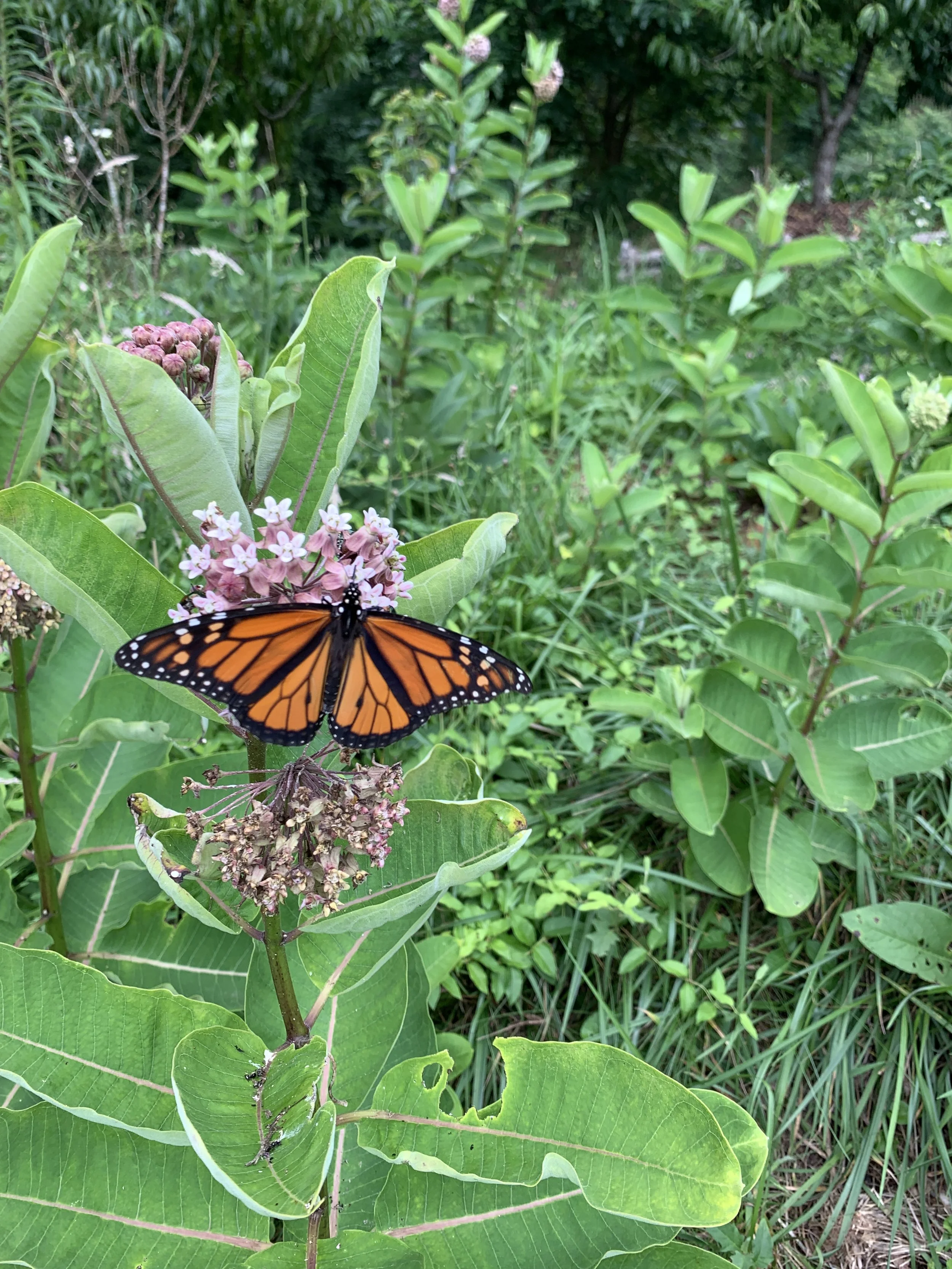
Why plant milkweed? Common Milkweed (Asclepias syriaca) is a crucial plant for the environment. The US Forest Service described Milkweed a “Nature’s mega food market” because at least 450 species of insect eat it. Milkweed’s most common claim to fame is that it’s the exclusive larval food source for Monarch butterfly caterpillars.
Monarchs have experienced extreme population decline for several decades, which overlap greatly with the rise in pesticide/herbicide use. Habitat loss is also a major driver of their decline, so planting native milkweeds in our yards and not using herbicide can be a great benefit to these charismatic pollinators and ourselves.
Milkweed is also a Human Food Source. Certain species of milkweed, mostly A. syriaca & A. speciosa, have been used as a traditional human food for thousands of years. Other species of milkweed may be toxic so stick with these species or reference Sam Thayer’s “Field Guide to Edible Wild Plants” for a more complete list.
Milkweed must be cooked properly before eating. The young spring shoots, flower buds, flowers, and immature seed pods are all incredible wild vegetables. They are absolutely sustainable to harvest as a food source for us and our tending milkweed populations is a great service to the monarchs are other wildlife.
If you’d like to learn more about how to eat common milkweed, check out the videos on the @healingecosystems Instagram or our Youtube page. You can also buy our Guide to Foraging Common Milkweed by clicking here. It describes how to harvest, prepare and eat Milkweed (and includes seeds!).
This is where the Million Milkweeds Project comes in. We are distributing Common Milkweed plants free or charge to our community to help restore these plant populations. Milkweed is by no means rare or endangered but is certainly underrepresented in our region. If you take a plant, please commit to planting it! It’s a fairly easy to grow. Plant it as soon as you can, give it water and mulch. It likes disturbed areas, well drained soil and full sun but is adaptable to a range of conditions including partial shade and clay soils.
It may need to be babied a bit to get through the first summer. It could take a few years before the patch is sustainable to harvest human food from, but it’s a great investment. It will go dormant in the Fall, but look for it to pop back up next Spring. Milkweed spreads by underground rhizomes. Your patch can produce more and more each year without much extra effort. Perhaps you will get to watch some monarch caterpillars go through their life cycle.
Email healingecosystems@gmail.com with any questions, comments or just to say what’s up. Also check out the “Classes” tab to learn more about our upcoming wild food workshops.
Thanks for planting & tending milkweed!